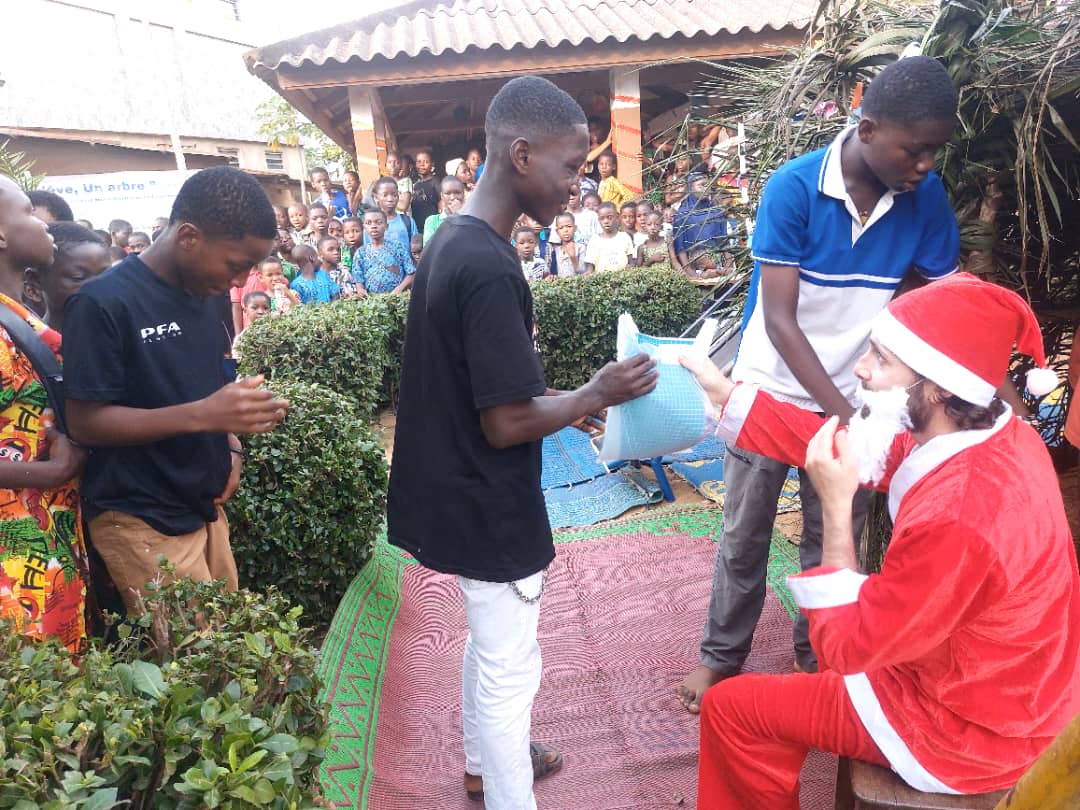
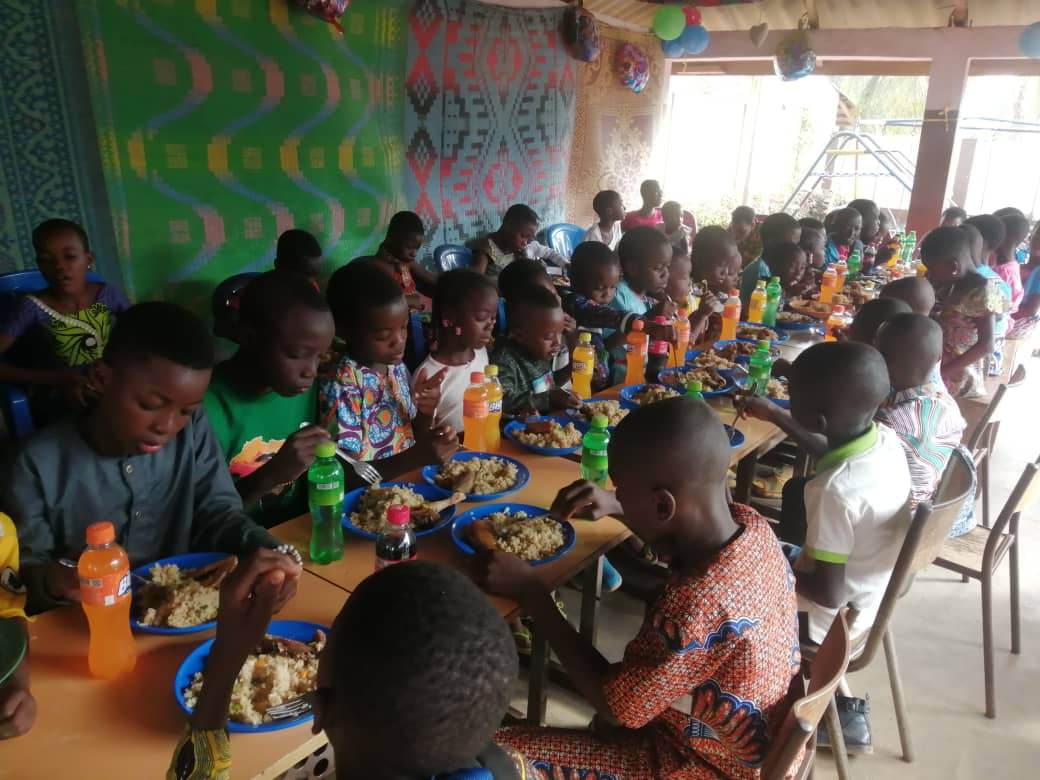
“Christmas for All” is a beautiful solidarity initiative led by the NGO ASTOVOT to bring joy and the magic of Christmas to children in the Zomayi neighborhood and surrounding areas. In an environment where opportunities for entertainment are rare, this project transforms the association’s library and its surroundings into a place of celebration and sharing for more than ten days.
Games, activities, workshops, and celebrations brighten the daily lives of children, many of whom do not have the chance to receive gifts or treats during this period. Thanks to “Christmas for All,” they can experience unique moments of happiness, dreams, and togetherness, while strengthening solidarity within the community.
2. Objectives
General Objective:
To enable children in the Zomayi neighborhood and its surroundings to experience moments of joy, creativity, and sharing during the Christmas season.
Specific Objectives:
Mobilize donations and gifts for beneficiary children.
Create a space for relaxation, leisure, and personal development.
Showcase children’s talents (arts, music, theater, sports).
Encourage sharing and togetherness through a meal with parents.
Organize cultural, sports, and artistic activities.
Provide each child with gifts and treats.
3. Planned Activities
Setup and decoration: installation of the “Christmas Village,” traditional hut, stands, and Christmas tree.
Entertainment and rehearsals: music, dance, games, creative workshops, and sports tournaments.
Film screenings for children and teenagers.
Grand festive finale: children’s performances (choreography, theater, fashion show, slam poetry, recital) in front of their parents.
Preparation and sharing of a friendly meal with children, parents, and facilitators.
Distribution of gift packages and treats to all children to close the festivities.
Evaluation and site maintenance after the activities.
Konaklama ve Yemek
ACCOMMODATION
Accommodation is usually basic and depends on the project location. Volunteers stay in groups of 3–4 per room, with room-sharing arrangements decided collectively. Some sites have dry toilets and showers without running water. Mats are provided, and volunteers may bring sleeping bags if possible. Drinking water is available on site, but electricity and internet access may be limited.
FOODS
During the camp, volunteers are responsible for preparing their own meals. An internal schedule organizes volunteers into groups that take turns handling household tasks, including cooking, cleaning, and meal preparation. Ingredients may be local, imported, or organic, and special dietary needs are taken into account whenever possible. Volunteers also enjoy a variety of tropical fruits such as bananas, oranges, pineapples, mangoes, avocados, and papayas, which are readily available during the camp.
Konum ve Serbest Zaman
Apart from the main camp activities, several recreational and cultural activities are organized, such as discovery walks, hiking, festive outings, and cultural exchanges. These activities allow volunteers to interact with local communities and to explore Togolese culture. During weekends, group excursions are arranged by volunteers and camp coordinators to visit local tourist sites in the project area. Please note that costs related to excursions and outings are not included in the participation fee.
Notlar
Passport: Must be valid for at least 6 months beyond the end of your stay and contain at least two blank pages for the visa. Visa: Application is done online. Current procedures and requirements for traveling to Togo are available at https://voyage.gouv.tg/. It is strongly recommended to apply well in advance. Yellow Fever Vaccination Certificate: Must be presented at check-in and upon arrival in Togo.
Konuşulan Diller
French
En Yakın Terminal
Unknown
Havaalanı
LFW
Konum
kPALIME: Kpalimé (Kloto) Kpalimé is located about 1 hour and 30 minutes by road from Lomé, set in a stunning natural environment. Situated in southwestern Togo, the area surrounding the town is lush and fertile, surrounded by densely wooded hills, deep valleys, and small rural villages. Kpalimé is also the country’s main artisanal center, home to a large number of artists and craftspeople, including wood sculptors, batik makers, potters, weavers, and gourds artisans. Numerous nature walks and hikes along the trails offer opportunities to discover the daily life of local communities, who rely primarily on agriculture for their livelihoods.