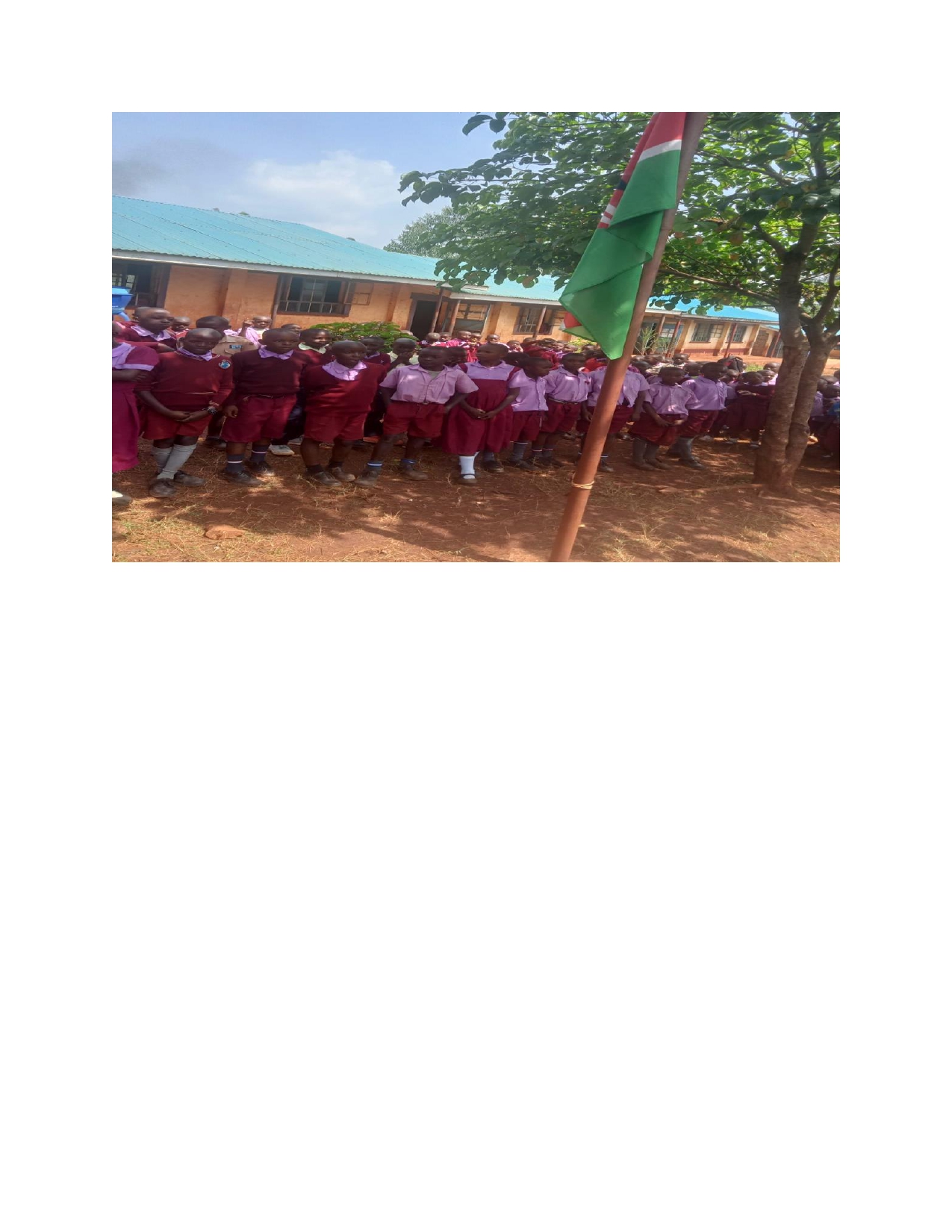
KVDA is an indigenous, non-political and membership organization which is non-sectarian and non-profit making started in 1962 as a work camp organization registered under the Societies’ Act. In 1993, KVDA was registered as a Non-Governmental organization by the establishment of the NGOs Coordination Act.
Vision Statement of KVDA: We envisage KVDA as an organization with a large membership working towards the improvement of quality of life of the community.
Mission Statement of KVDA: Mobilizing all-purpose resources to support community development initiatives.
Core Values or Operating Principles
· Promotion of voluntarism.
· Transparency and accountability.
· Participatory evaluation of projects.
· Local community ownership of projects:
· Continuous research and development.
· Regular follow up of projects.
· A learning organization.
· Documentary evidence of processes and events.
Strategic Objectives
· Afford voluntary service opportunities to young people.
· Mobilize communities to action.
· Supplement formal education with experiential learning.
· Create awareness amongst Kenyan communities about development issues.
· Foster global peace, friendship and understanding.
· Mobilizing all-purpose resources to promote grassroots development
Values
KVDA has a 62-year history of working to “develop against dependence” while cultivating trust and friendships with volunteers and partner organizations all over the world. The three mandates of the organization are as follows:
■ The Association shall be a non-profit, non-governmental, non-religious and non-political Association, whose inspiration is the furtherance of peace, friendship, understanding, development, democracy and equality among peoples of different cultures and backgrounds.
■ The Association is dedicated to seeking opportunities for young men and women from diverse national, cultural and educational backgrounds to live, work and share life and experiences in order to improve their world, to provide voluntary services to marginalized communities, to acquire alternative education, to gather information and build international cooperation.
■ The Association is further dedicated to mobilizing resources within and across national borders to support community development initiatives whose aims are to eradicate poverty and human suffering as well as to promote democracy and justice among peoples.
İş Tanımı
The school was founded in 2016 and the pupils’ enrolment is 444 pupils, 226 boys and 218 girls.
The school has 15 teachers teaching right from the early childhood education, primary school and junior primary school.
The school has six permanent and four semi-permanent classrooms, staffroom and an administration block.
The school is located on 0.9 acres that has adequate room for expansion.
It is located in a densely populated area in Vihiga county of Western Kenya, an area that receives rainfall throughout the year and hence the local community members are food sufficient as the communal land is utilized for small-scale agriculture that is the foremost economic driver of the people at the grassroots
• Teaching
• Playing with children
• Brick making and sand harvesting
• Home visits
• Inter-cultural education to foster global cooperation
Konaklama ve Yemek
• The host community will provide a house to accommodate the volunteers with basic living conditions.
• Volunteers have an obligation to climb down the level of the people with the aim of exposure to development challenges.
• KVDA will provide foodstuffs and volunteers will cook their own meals in turns.
• Water is available from springs and it is recommended that drinking water should be boiled or medicated.
• Mineral water available at supermarkets is recommended.
• There is electricity connection at the project and solar energy in case of power outages and the volunteers can charge electric appliances at the project.
Konum ve Serbest Zaman
Volunteer have the opportunity to visit local villages and experience cultural diversity among the Banyore Community from the Legendary Luhya ethnic group
KVDA offers educational tours to spectacular sites of interests and we welcome volunteers interested to request through email for specific information.
We look forward to welcoming you to our wonderful country Kenya.
Notlar
• Girls’ education goes beyond getting girls into school. It is also about ensuring that girls learn and feel safe while in school; complete all levels of education with the skills to effectively compete in the labor market; learn the socio-emotional and life skills necessary to navigate and adapt to a changing world; make decisions about their own lives; and contribute to their communities and the world.
• Girls’ education is a strategic development priority. Better-educated women tend to be healthier, participate more in the formal labor market, earn higher incomes, have fewer children, marry at a later age, and enable better health care and education for their children, should they choose to become mothers. All these factors combined can help lift households, communities, and nations out of poverty.
• According to UNESCO estimates, 130 million girls between the age of 6 and 17 are out of school and 15 million girls of primary-school age—half of them in sub-Saharan Africa— will never enter a classroom.
• Poverty remains the most important factor for determining whether a girl can access an education. For example, in Nigeria, only 4 percent of poor young women in the North West zone can read, compared with 99 percent of rich young women in the South East. Studies consistently reinforce that girls who face multiple disadvantages — such as low family income, living in remote or underserved locations, disability or belonging to a minority ethno-linguistic group — are farthest behind in terms of access to and completion of education.
• Violence also negatively affects access to education and a safe environment for learning. For example, in Haiti, recent research highlights that one in three Haitian women (ages 15 to 49) has experienced physical and/or sexual violence, and that of women who received money for sex before turning 18 years old, 27 percent reported schools to be the most common location for solicitation.
• Child marriage is also a critical challenge. Child brides are much more likely to drop out of school and complete fewer years of education than their peers who marry later. This affects the education and health of their children, as well as their ability to earn a living. According to a recent report, more than 41,000 girls under the age of 18 marry every day and putting an end to the practice would increase women’s expected educational attainment, and with it, their potential earnings. According to estimates, ending child marriage could generate more than $500 billion in benefits annually each year
• Every day, girls face barriers to education caused by poverty, cultural norms and practices, poor infrastructure, violence, and fragility. The WBG has joined with governments, civil society organizations, multilateral organization, the private sector, and donors to advance multi-sectoral approaches to overcome these challenges. Working together with girls and women, the WBG focus includes:
• Providing conditional cash transfers, stipends or scholarships;
• Reducing distance to school;
• Targeting boys and men to be a part of discussions about cultural and societal practices;
• Ensuring gender-sensitive curricula and pedagogies;
• Hiring and training qualified female teachers;
• Building safe and inclusive learning environments for girls and young women;
• Ending child/early marriage; and
• Addressing violence against girls and women